Target Keywords: Mobile tub grinder, industrial biomass shredder, whole tree grinder, diesel wood waste grinder, forest residue processing equipment.
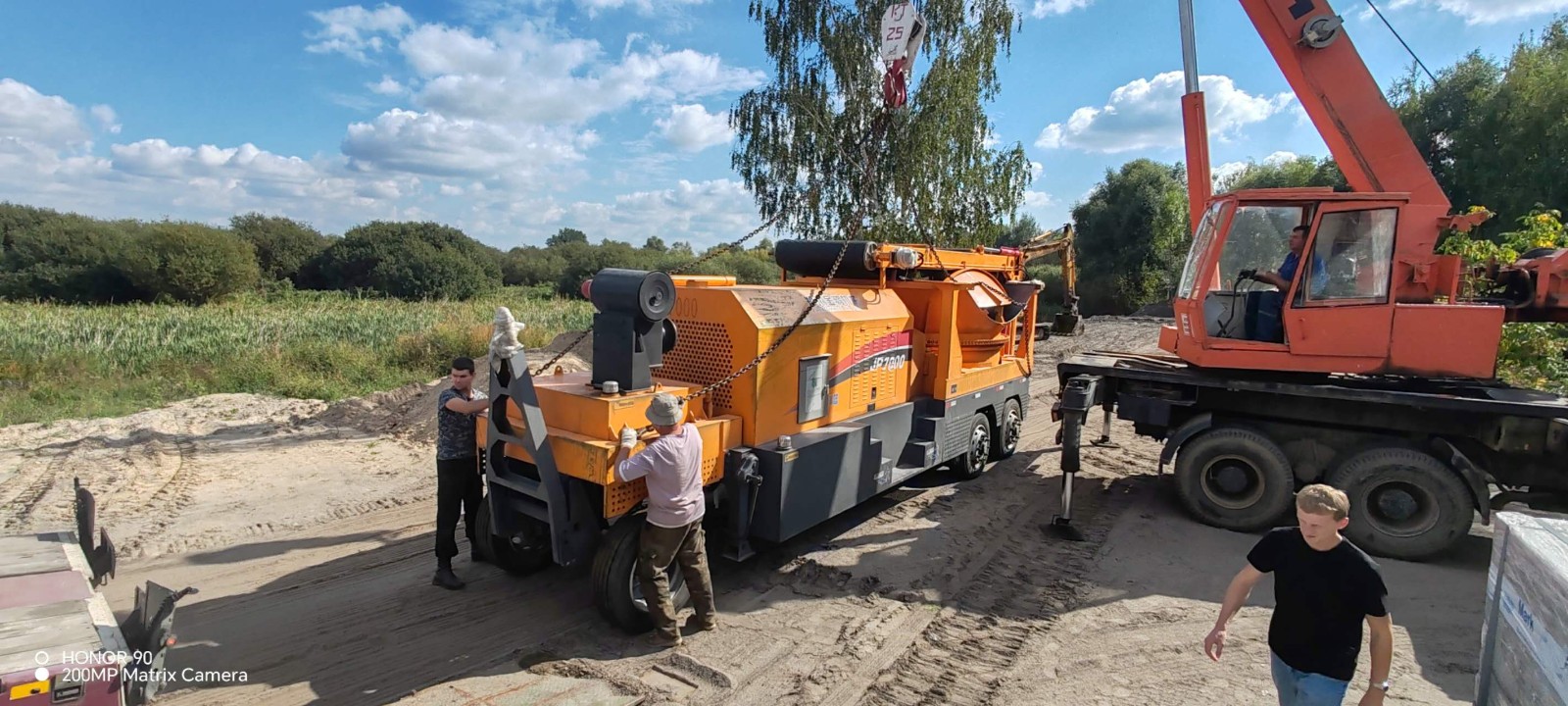
Engineered for demanding land-clearing and biomass recycling applications, the JP7000 Mobile Tub Grinder is a robust, high-capacity solution designed to process whole trees, stubborn tree stumps, root systems, and green waste. Operating independently of grid power via a high-output diesel engine, it delivers high-performance volume reduction directly at forest sites, processing yards, and municipal wood-waste facilities.
Biomass Power Generation: Pre-treatment and size reduction of woody biomass for boiler fuel co-firing.
Land Clearing & Forestry: On-site processing of logging residues, whole trees, and oversized stumps.
Mulch & Landscape Production: Shredding green waste, orchard timber, and tree branches into uniform mulch.
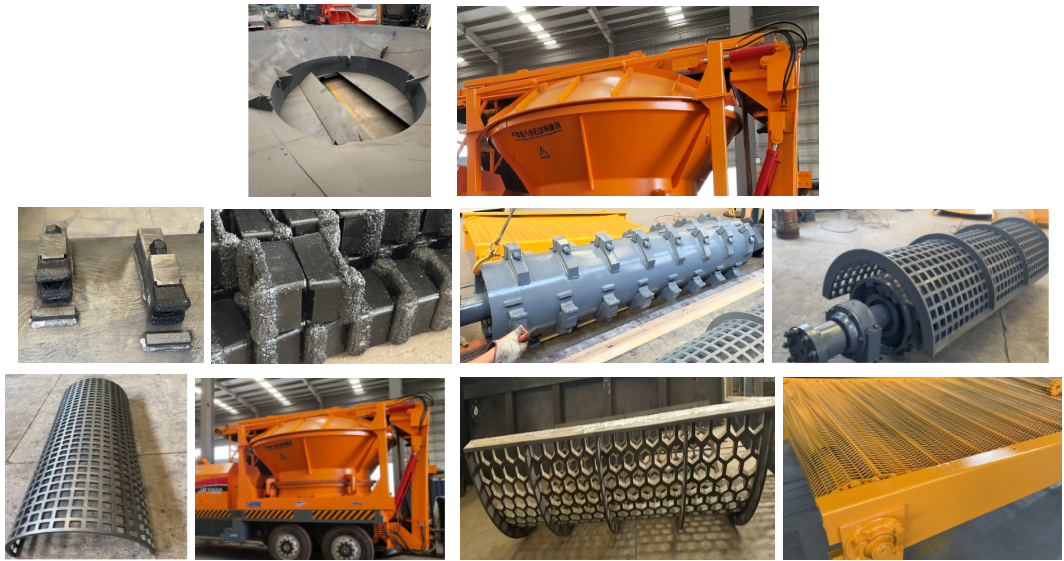
Self-Feeding Friction: The wide-opening feed tub operates without traditional feed rollers, relying on material weight and rotational friction. This design naturally handles irregular, bulky, or dirt-laden feedstock without bridging or arching.
No Pre-Cutting Required: Large stumps and whole trees can be loaded directly by a grapple loader, significantly boosting operational efficiency for land-clearing contractors.
Easy Maintenance Access: The entire tub tilts hydraulically, exposing the rotor and screening components for routine servicing without complex disassembly.
Robust Rotor Design: The heavy-duty solid drum features helically arranged tool holders fitted with high-hardness, replaceable alloy hammer blocks.
Wear Resistance & Balance: Precision heat-treated alloy components maximize wear life, while dynamic rotor balancing minimizes vibration, protecting structural welds and bearing assemblies.
Customizable Sizing: Material passes through robust bottom screens available in various aperture patterns to achieve the desired output spec.
Hydraulic Foldable Conveyor: The under-bed discharge conveyor continuously clears processed material for direct truck loading or ground stockpiling, retracting smoothly into transport dimensions for relocation.
Smart PLC Control: Automatic load-sensing technology adjusts feed rates dynamically to prevent rotor stalling and optimize fuel efficiency.
Parameter | Specification |
Throughput Capacity | 20–40 t/h (varies by feedstock and screen size) |
Feed Tub Dimensions | Ø3,600 mm top opening; depth 1,400 mm |
Maximum Working Diameter | Up to 2,400 mm |
Cutting Drum Assembly | High-speed impact rotor with replaceable alloy tooling |
Power Unit | Heavy-duty 530 HP diesel engine |
Fuel Consumption | 20–45 L/h (operation-dependent) |
Discharge Conveyor | 1,000 × 10,000 mm, hydraulically foldable (4.2 m discharge height) |
Mobility | Wheel-mobile, multi-axle towable chassis |
Control System | Hydraulic feed regulation + smart PLC automation |
Complete Mobility: Independent diesel-powered design eliminates site power limitations, allowing rapid deployment across remote forestry locations.
Lower Pre-Processing Costs: Eliminates the need for pre-sawing or splitting large stumps, saving labor and equipment overhead.
Predictable Operating Expenses: Reversible cutting components and modular wear parts ensure transparent per-ton maintenance budgeting.
One-Man Operation: Automated load control allows safe, efficient operation managed via remote interface.
Flexible Payment: Standard commercial terms with secure advance and pre-delivery settlement.
Reliable Delivery: Streamlined manufacturing schedules to minimize project startup delays.
Comprehensive Warranty: Backed by standard manufacturer warranty covering core structural and mechanical assemblies (excluding normal wear components like screens and knives).
Technical Assistance: Global engineering support for installation guidance, trial runs, and long-term spare parts supply.
【 FAQ】
Before Purchase
Q1. Tub grinder or horizontal grinder — how do I know which one my material needs?
If your feedstock is bulky and irregular — whole trees, stumps, large chunks, mixed piles — a tub grinder is the stronger choice: the open-top tub accepts material dropped directly by loader, without needing a feeding conveyor to tame tangled geometry. Horizontal grinders suit operations processing a steady stream of pre-staged material with frequent end-product switching. Our engineers will recommend against your actual feedstock photos and dimensions — send them before quoting.
Q2. How does the JP7000 output size compare with a chipper, and how do I control particle size?
A chipper cuts clean round wood into uniform chips; a tub grinder impacts irregular mixed material and its output size is controlled by the screen/grate and knife configuration.Output from the JP7000 spans a broader distribution than chipper output — if your downstream (boiler feed spec, mulch grade) requires a tight window, we will configure the matching screen and, where necessary, pair the unit with a screening stage as in our Africa project.
Q3. My material is wet, fresh-cut green waste — will throughput drop badly?
Yes, expect some reduction — wet fibrous material takes more impact energy and fresh green waste is heavier per cubic meter. The 20–40 t/h range in the spec table reflects this spread: clean dry material runs at the top end, high-moisture mixed waste at the lower end. The smart-feeding PLC compensates by modulating feed rate against load, preventing the stalls that fixed-rate feeders suffer in wet conditions.
Q4. Can the JP7000 ship to my country — what about emissions compliance for the diesel engine?
The JP7000 ships worldwide including Central Asia and Africa. One important note: the FAW diesel engine in standard configuration is not EPA Tier 4 / EU Stage V certified, so for imports into the USA or EU, engine compliance must be discussed case by case. For most emerging markets no such restriction applies. Tell us the destination country and we will confirm engine eligibility before quoting.
During Purchase
Q5. Can I test the machine with my own material before signing?
Yes — we encourage it. Ship a sample load of your feedstock to our Zhengzhou works, or visit in person to run the test. The resulting capacity and particle-size data is the basis for the performance figures in your contract, not a marketing claim. We also welcome third-party inspection before shipment.
Q6. What are the payment terms, lead time and warranty?
Standard terms: 30% T/T in advance, balance before delivery; production within 30 days of the advance payment; warranty of 12 months after installation & trial run or 15 months after delivery, whichever comes first. Knives, bed knives and screens are wear parts and excluded from warranty; everything else defective is repaired or replaced at our cost. These terms can be adjusted for repeat customers and larger orders.
After Purchase
Q7. How long does a set of cutting knives last, and what does replacement cost per ton?
Knife life depends heavily on feedstock contamination — clean wood vs. material with embedded grit differs by a factor of several. The 24 knives are indexable: each can be flipped once, effectively doubling life before resharpening or replacement. Send us your material type and annual throughput and we will calculate a per-ton wear-part budget for planning, plus a recommended spare-knife stock.
Q8. What are the daily and periodic maintenance tasks my operator must handle?
Daily: grease points, hydraulic oil level, conveyor belt tracking check, and clearing debris from the tub and discharge belt.
Weekly: knife edge inspection, hydraulic hose check, bolt torque on knife fixings.
Periodic: hydraulic oil and filter changes on the hour-meter schedule.
We supply a full maintenance manual in English at delivery, and conveyor belt tracking — the most common routine adjustment on any grinder — is covered step-by-step.
Q9. If a part fails in my country, how fast can I get it?
Wear parts (knives, bed knives, screens, conveyor belt, hydraulic seals) ship from our works by air courier, typically 5–10 days door-to-door depending on destination. We recommend a first-stock spares package shipped with the machine — sized to your material and throughput — which eliminates most urgent-air-freight scenarios. Repeat customers in Central Asia operate on this model with zero unplanned downtime from parts shortage.
Q10. Is the machine safe for a single operator — how does remote control help?
Yes — that is the design intent. The PLC remote control lets the operator stand at a safe distance from the tub while loading and grinding, away from flying debris, which is the standard professional practice for tub grinders. Emergency stop, feed-rate adjustment and conveyor folding are all on the remote. We provide operator training documentation at delivery, and one of our engineers supervises the first days of on-site operation.
Looking for a high-efficiency mobile grinding solution for your project?
Send your feedstock details and target output specifications to request a customized technical proposal and quotation today.