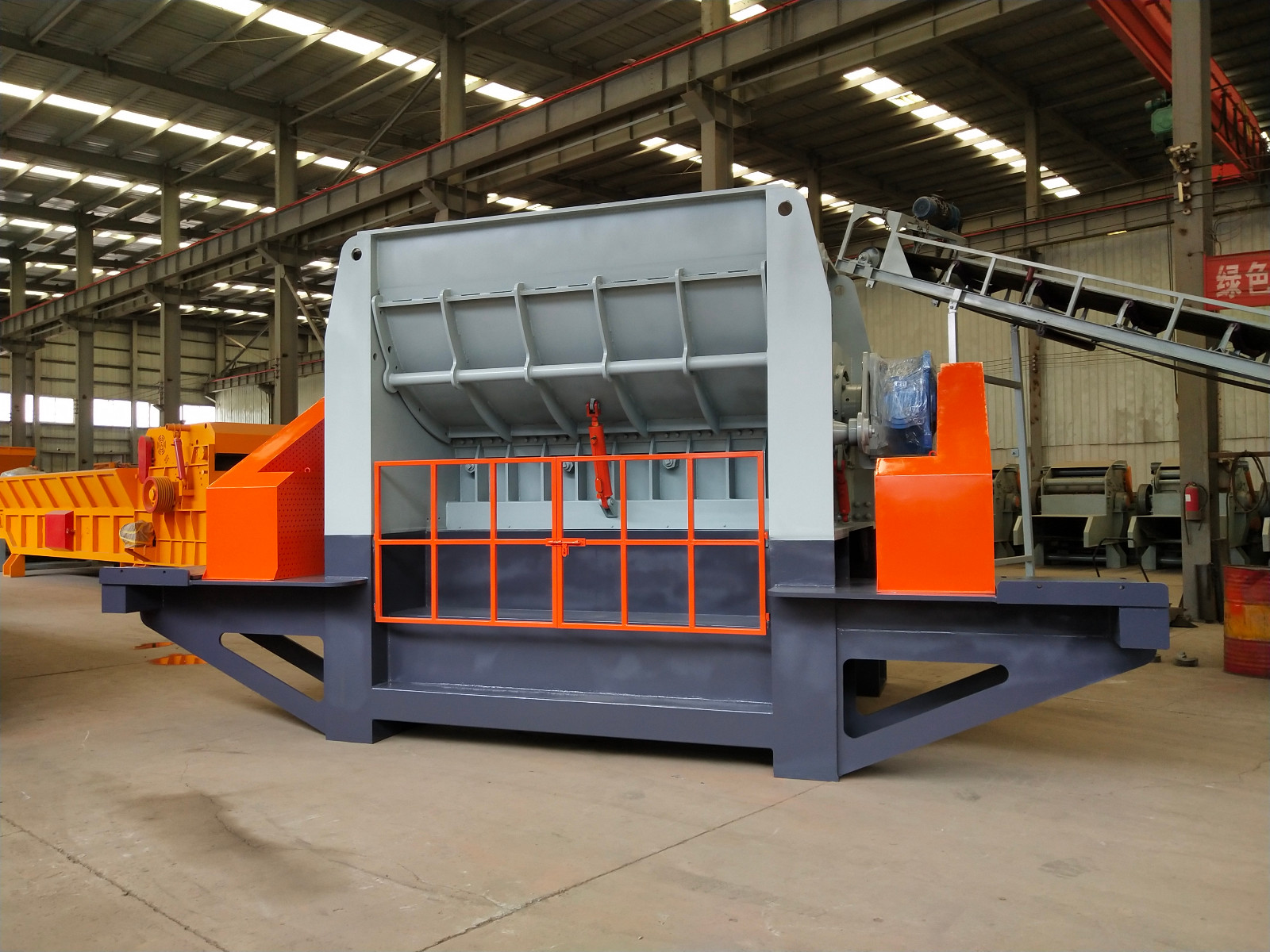
Target Keywords: Single shaft shredder, RDF shredder, solid recovered fuel shredder, municipal waste shredder, industrial commercial waste shredder
| Product Overview
Engineered for demanding refuse-derived fuel (RDF / SRF) production, the JP Series is a heavy-duty stationary single-shaft shredder built for one-step shredding of untreated municipal solid waste, commercial & industrial waste. Powered by high-torque electric drive, it delivers consistent particle size 40–120 mm in a single pass, eliminating the need for primary + secondary shredding lines. Optimized for 24/7 continuous operation at waste treatment plants, cement plant fuel preparation facilities and recycling hubs.
| Primary Applications
RDF / SRF Alternative Fuel Production: One-step size reduction of mixed municipal & commercial waste for cement kiln calciner co-firing and waste-to-energy boilers.
Municipal Solid Waste Processing: Treatment of residual household waste, bulky waste and packaged refuse. Industrial & Commercial Waste Recycling: Shredding of packaging waste, non-recyclable industrial rejects for energy recovery.
Waste Wood Recycling: Processing contaminated waste wood into homogeneous fuel fractions.
| Core Engineering & Working Principles
Hydraulic Internal Pusher Feeding System Controlled Material Infeed: The patented internal hydraulic pusher maintains constant pressure on feedstock, preventing bridging of tangled, bulky waste and stabilising rotor load. No external feed roller arrangement required.
Wide Feed Hopper: Large hopper opening accepts wheel loader direct feeding of mixed, irregular waste bales and bulky items.
Hydraulic Maintenance Door: Quick access for removing unshreddable contaminants, minimising machine downtime during foreign object blockages.
Low-Speed High-Torque Single Rotor Cutting Unit Helical Knife Arrangement: Rotor fitted with Lindner 172RP pointed replaceable knives; helical layout smooths cutting shock and reduces peak power draw.
Two-Stage Belt Countershaft Drive: Integrated flywheel mass stores rotational energy, absorbing sudden load spikes. Independent test confirms higher throughput and lower specific energy consumption vs conventional single-shaft drives.
Torque-Limiting Safety Clutch: Instant mechanical decoupling to protect rotor and drive train when hard contaminants enter the cutting chamber. Rotor speed fixed at 112 rpm for high torque cutting rather than impact crushing.
Modular Screening & Discharge System Customisable Particle Sizing: Interchangeable polygonal / hexagonal bottom screens control final output size between 40–120 mm to match cement plant or boiler fuel specifications.
Continuous Discharge Conveyor: Material passing through the screen falls onto the under-shredder discharge conveyor, transporting finished RDF for magnetic metal separation and stockpiling.
PLC Load Sensing Automation: Intelligent pusher speed regulation dynamically adjusts feed rate according to rotor load, avoiding stalls and stabilising power consumption during fluctuating feedstock quality.
| Technical Specifications
| Parameter | Specification |
|---|---|
| Throughput Capacity | 16–32 t/h (JP2000: up to16 t/h; JP2500: up to22 t/h; JP3000: up to32 t/h, varies by waste composition and screen size) |
| Feed Hopper Dimensions | JP2000: 2050*2300*900mm; JP2500:2500*2500*1000 mm; JP3000:3000*3000*1200 mm |
| Hopper Volume | 8 / 9 /10 m³ respectively |
| Rotor Assembly | 112 rpm low-speed high-torque rotor, replaceable 172RP pointed knives |
| Installed Power | JP2000:160-250 kW; JP2500:250-350 kW; JP3000:315-400 kW |
| Output Particle Size | 40–120 mm (screen dependent) |
| Machine Weight | 24,600 kg / 26,000 kg /33,800 kg |
| Mobility | Stationary fixed installation |
| Control System | Hydraulic pusher regulation + JP smart PLC automation |
| Operational Advantages for Waste Plant Operators
One-Pass Processing: Single-step shredding cuts capital investment by removing requirement for a two-stage shredding setup, reducing plant footprint.
Stable 24/7 Continuous Operation: Low-speed cutting principle generates fewer fine particles, better calorific consistency for cement kiln fuel.
Lower Per-Tonne Operating Cost: Flywheel drive reduces energy consumption; modular knife design enables individual knife replacement instead of full rotor overhaul.
Integrated Contamination Protection: Safety clutch + hydraulic maintenance door reduce downtime caused by metals, stones and other foreign objects in mixed waste.
| Commercial Terms & Support
Flexible Commercial Terms: Standard commercial terms with secure advance payment and balance before shipment.
Reliable Lead Time: Factory production schedule tailored to waste plant project timelines.
Comprehensive Manufacturer Warranty: Warranty covers core rotor, drive and structural assemblies. Wear parts (knives, screens, sealing elements) are excluded from standard warranty.
Global Technical Support: Commissioning supervision, on-site operator training and worldwide spare parts logistics network.
【 FAQ】
——Before Purchase
Q1. Single-shaft Polaris vs twin-shaft shredder — which one fits RDF production?
If your target is finished RDF/SRF with controlled particle size in one pass, JP single-shaft is the preferred option. Twin-shaft shredders are mainly for coarse pre-shredding and cannot deliver calibrated final fuel size in one stage. JP cuts mixed residual waste directly to 40–120 mm ready for thermal utilisation. Send your waste composition and target fuel spec for our engineer evaluation before quotation.
Q2. How does Polaris one-step RDF output compare with two-stage shredding lines?
Two-stage lines use primary shredder followed by secondary fine shredder. JP replaces both machines. Its low-speed shear cutting produces less ultra-fine dust fraction, which improves fuel quality and reduces boiler fouling risk. If your downstream requires tighter particle tolerance, we can configure finer screens or pair with post-screening system.
Q3. My feedstock contains high plastic film and wet household waste — will throughput drop significantly?
Yes, throughput will decrease with high moisture and high film content. The 16–32 t/h rating is based on typical mixed commercial waste. Wet sticky waste tends to cling to rotor and screens. The PLC automatic pusher load control slows feeding to prevent rotor stalls, maintaining stable operation even for difficult wet waste.
Q4. Can Polaris run continuously with occasional metal hidden inside waste stream?
The torque-limiting safety clutch protects the drive from sudden overload. If unshreddable metal enters, the clutch disengages instantly. The hydraulic maintenance door allows operators to open the chamber and remove foreign objects quickly. We recommend installing upstream magnetic separation as pre-treatment to reduce contamination frequency.
——During Purchase
Q5. Can we conduct material test with our own waste before order confirmation?
Yes. You may send representative waste samples to Lindner test facility for shredding trials. The test report will record actual throughput, particle size distribution and power consumption to define guaranteed performance parameters in the contract. Third-party inspection is acceptable prior to shipment.
Q6. What are payment terms, lead time and warranty coverage?
Standard terms: 30% T/T advance, balance before delivery. Production lead time subject to model selection and factory order backlog.
Warranty: 12 months after commissioning, or 15 months after delivery whichever comes first. Knives, screens and wear liners are consumable wear parts and not covered by warranty.
Terms can be negotiated for large turnkey waste projects.
——After Purchase
Q7. What is the service life of the JP rotor knives and what is wear part budget per ton?
Knife service life heavily depends on waste contamination level, especially embedded grit and metal content. The 172RP pointed knives can be rotated multiple times to utilise all cutting edges. Send your waste analysis and annual tonnage to us for calculating wear parts consumption forecast and recommended spare parts inventory.
Q8. What are daily and periodic maintenance tasks for operators?
Daily: Check hydraulic oil level, inspect pusher and hopper for debris buildup, check wear surface condition, visual inspection of drive guards.
Weekly: Check knife fastening bolts, inspect screen plates, check hydraulic hoses for leaks.
Periodic: Hydraulic oil and filter replacement, rotor bearing inspection and lubrication following service hour schedule.
Full English operation & maintenance manual supplied with the machine.
Q9. If critical spare parts fail at our plant, how fast can parts be delivered?
Wear parts including knives, screens and hydraulic components can be shipped by air courier. We recommend stocking a spare wear parts package together with machine delivery to eliminate production downtime waiting for international shipment. Lindner maintains regional spare parts warehouses for major markets.
Q10. Is the machine safe for continuous unattended operation?
The JP is designed for automated 24-hour running with PLC overload protection and emergency stop system. Operators only need periodic patrol inspection. Full operator training will be provided during commissioning to cover safety procedures, normal operation and blockage clearing protocols.
Looking for a reliable one-step RDF shredding solution for your waste-to-energy or cement fuel project?
Send your feedstock characteristics, target particle size and required hourly capacity to request a customized technical proposal and quotation today.